-
 Metālapstrādes nozarē šķidrumi
-
 Tekstilrūpniecības eļļas
-
 Mēbeļu rūpniecības smēres
-
 Saldēšanas rūpniecības eļļas
-
 Elektroeļļas
-
 Dzelzceļu smēres
-
 Armijas tehniskais smēres
-
 Gāzes nozares smēres
-
 elektronikas nozares smēres
-
 Stikls
-
 Celtniecības nozarē
-
 Žemės ūkis
-
 Ceļu būvniecības nozares eļļas
-
 Mežizstrādes tehnika eļļas
-
 Iepakojums














-
 Gultņiem
-
 Ķēžu smērvielas
-
 Transmisijas eļļas
-
 Zobratu pārvadu smēres
-
 Troses
-
 Skrūvju savienojumi
-
 Lineārās vadotnes
-
 Elektroiekārtu smēres
-
 Jūgierīces Smēres
-
 Konveijers smēres
-
 Smalkmehānika, instrumenti
-
 Turbīnas eļļas
-
 Transformatoru eļļas
-
 Hidrosistēmu eļļas
-
 Pneimatisks eļļas
-
 Saldēšanas kompresori eļļas
-
 Gaisa kompresoru eļļas
-
 Vakuumsūkņu eļļas
-
 Siltumnesēji eļļas
-
 Metināšanas iekārta smērviela
-
 Formu eļļas
-
 Metālapstrādes šķidrumi un eļļas
-
 Motorzāģu eļļas
-
 Ūdens sūkņi
-
 Gofrētā kartona ražošana smēres
-
 PRESSFORMEN.COM
-
 Smēres plastmasas detaļām
-
 Vārsts smēres
-
 Robotika smērviela
-
 Centrifūga smērviela
-
 Laboratorijas aprīkojums smērviela
-
 Difūzijas sūknis silikona eļļas
-
 Sūkņi smērviela
-
 Pūtējs smērviela
-
 Blīvējumi, O-gredzeni
-
 Smērviela velkot kabeli
-
 Centrālajās eļļošanas sistēmās smēres
-
 Adīšanas mašīnas plācenis
-
 Elektroiekārtu smēres
-
 Starpprodukti
-
 Alumīnijam
-
 Celtņiem
-
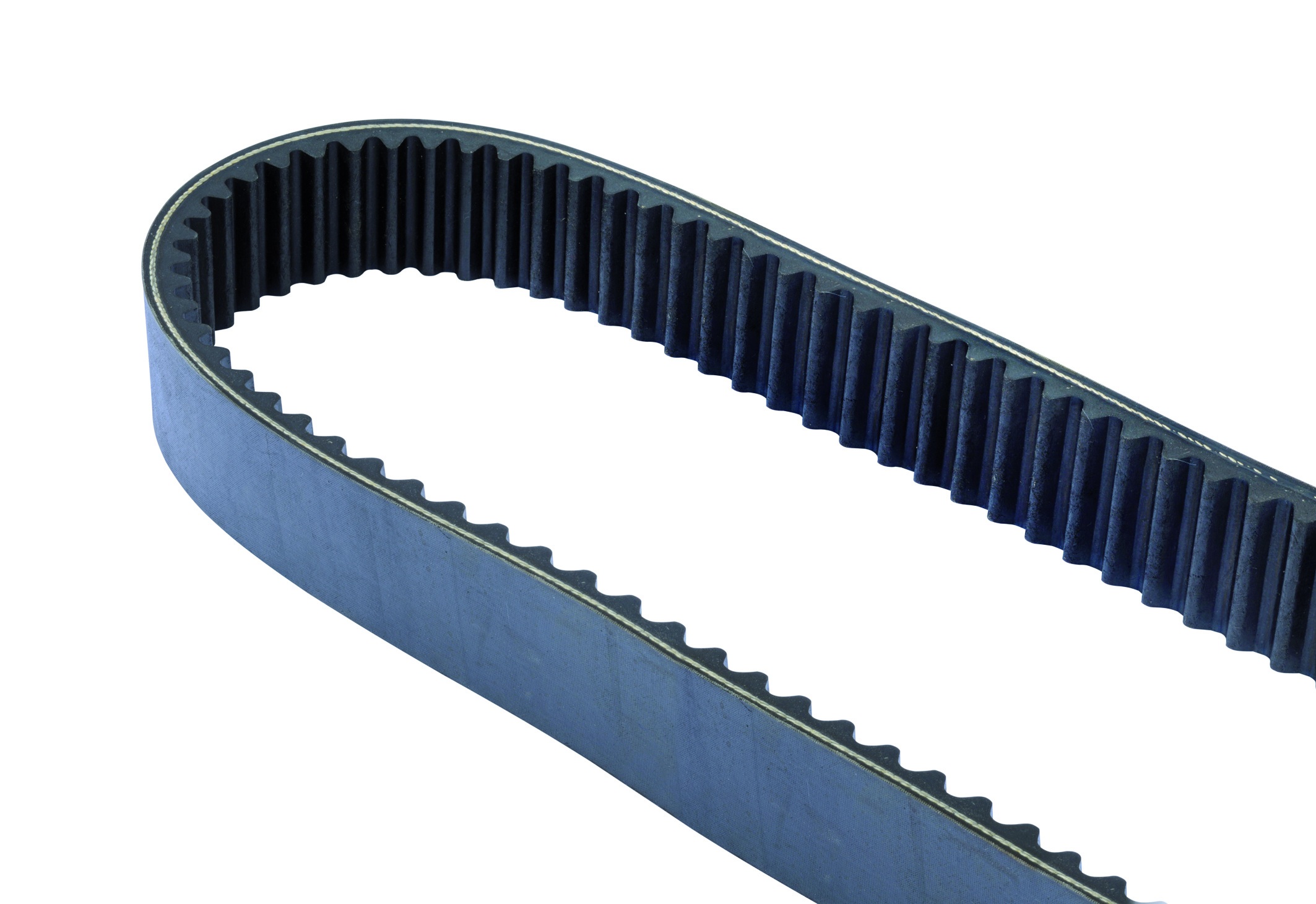 Grafīts piedziņas siksnām



CPI Engineering smēres
CPI Solest saldēšanas eļļa CPI-4628
Uzņēmumu CPI Engineering Services 1971. gadā Midlendā, Mičiganas štatā, dibināja Viljams (Bils) Millers un viņa sieva Lorēna. Uzņēmuma sākotnējā koncepcija bija sniegt inženierkonsultāciju pakalpojumus, mašīnbūves iekārtas un ierobežotu skaitu augsti specializētu sintētisko smērvielu rūpnieciskai lietošanai.
CPI Fluid Engineering, kas ir The Lubrizol Corporation nodaļa, uzlabo mūsdienu dzīvi, izmantojot šķidrumu inženieriju. Mūsu produkti ietekmē ikdienas dzīvi, palīdzot nodrošināt dabisku enerģiju, mājas komfortu, drošu un veselīgu pārtiku un daudz ko citu. CPI apvieno labāko no abām pasaulēm — liela iekārtu un smērvielu ražotāja ražošanas iespējas un tehniskās pielietošanas pieredzi ar uz pakalpojumiem orientētas organizācijas elastību un reaģētspēju.
CPI 4624-68F CP eļļa
CPI-4624-F sērijas produkti ir pēc pasūtījuma sajaukti sintētiski ogļūdeņražu šķidrumi, kas nodrošina izcilu augstas un zemas temperatūras eļļošanu, samazinātu gaistamību un saderību ar minerāleļļām un iekārtām, kas paredzētas minerāleļļu izmantošanai. Satur inhibitorus, kas aizsargā pret koroziju un oksidēšanos.
CPI-4624-F 68 produkti ir ilgstošas lietošanas pārtikas kvalitātes smērvielas, kas īpaši izstrādātas izmantošanai kā blīvēšanas šķidrumi ķīmisko procesu sūkņos, kompresoru smērvielās/dzesēšanas šķidrumos un citās lietojumprogrammās, kurām nepieciešama uzlabota ķīmiskā stabilitāte.
1996. gadā Lubrizol Corporation iegādājās CPI Engineering Services. Lubrizol Corporation, Berkshire Hathaway uzņēmums, ir inovatīvs specializēto ķīmisko vielu uzņēmums, kas ražo un piegādā tehnoloģijas klientiem globālajos transporta, rūpniecības un patērētāju tirgos. Šīs tehnoloģijas ietver smērvielu piedevas motoreļļām, citiem ar transportu saistītiem šķidrumiem un rūpnieciskajām smērvielām, kā arī benzīna un dīzeļdegvielas piedevas. Lubrizol ražo arī sastāvdaļas un piedevas personīgās higiēnas līdzekļiem un farmaceitiskajiem līdzekļiem.
CPI GRS-900-F smērviela
GRS-900-F smērviela ir uzlabota pārtikas kvalitātes smērviela, kas īpaši izstrādāta, lai nodrošinātu izcilu veiktspēju un pārtikas kvalitātes tīrību.
GRS-900-F ir augsta sastingšanas temperatūra, laba sūknējamība zemā temperatūrā un lieliska izturība pret izskalošanos ar ūdeni. Turklāt tai ir lieliskas pretnodiluma un EP īpašības, kā arī aizsardzība pret koroziju.
GRS-900-F ir ieteicams pārtikas pārstrādes iekārtu buksu un pretslīdes gultņu, slīdņu, vadotņu un savienojumu eļļošanai.
GRS-900-F atbilst augstākajiem pārtikas nozares standartiem: USDA H1 apstiprinājums nejaušai saskarei ar pārtiku un FDA noteikums CER 21 178.3570. Tas ir arī sertificēts lietošanai košera pārtikas produktu gatavošanā.
CPI-1507
|
Originalus produktas |
Siūloma alternatyva |
|---|---|
| Šaldytuvų kompresorių alyvos | |
| CPI RPAG | Molyduval Patricia KG |
| CPI Lenoil | Molyduval Patricia KAB |
| CPI CP-4600 | Molyduval Patricia K STR |
| CPI Solest LT-32 | Nycobase 7450 |
| CPI Solest 32 LC | Molyduval Patricia KOE 32 |
| CPI Solest 35 | Molyduval Patricia KOE 35 |
| CPI Solest 46 | Nycolube 3040 |
| CPI Solest 68 | Nycolube 3050 |
| CPI Solest 120 | Nycolube 3060 |
| CPI Solest 170 | Molyduval Patricia KOE 170 |
| CPI Solest 220 | Molyduval Patricia KOE 220 |
| CPI Solest 370 | Molyduval Patricia KOE 320 |
| CPI CP-4214-150 | Molyduval Patricia KOE 150 |
| CPI CP-4214-320 | Molyduval Patricia KOE 320 |
| Oro kompresorių alyvos | |
| CPI CP-4100 | Molyduval Patricia CDA 100 |
| CPI CP-4201 | Molyduval Patricia CDA 46 |
| CPI CP-4601 | Molyduval Patricia CDE |
| CPI CP-4600-F | Molyduval Soraja CDA |
| CPI CP-4600-46-F | Molyduval Soraja CDA 46 |
| CPI CP-1542 | Molyduval Patricia CDG |
| CPI CP-9001 | Molyduval Patricia CDMA |
| Maistiniai tepalai | |
| CPI CP-4608-220 – 460 | Molyduval Syntholube A 220 LM |
| CPI CP-4678-68-F | Molyduval Sekorex Non-Tox 68 |
| CPI CP-4601-100PAO | Molyduval Amadeus A 100 |
| CPI CP-4608-32-F - 68 | Molyduval Biolube H |
| CPI GRS-900-F | Molyduval Soraja BM 2T |
| CPI GRS-460-F | Molyduval Soraja B 100 |
Precīzāka savstarpēja aizvietojamība — pamatojoties uz jūsu iekārtas sākotnējiem eļļošanas ieteikumiem un ekspluatācijas apstākļiem
CPI CP-4100-32
ISO Grade 32, Diester Grade 32 based
CPI CP-4100-68
ISO Grade 68, Diester Grade 68 based
CPI CP-4100-68
ISO Grade 68, Diester Grade 68 based
CPI CP-4100-100
ISO Grade 100, Diester based
CPI CP-4100-100
ISO Grade 100, Diester based
CPI CP-4100-150
ISO Grade 150, Diester Grade 150 based
CPI CP-4100-150
ISO Grade 150, Diester Grade 150 based
CPI CP-4600-32F
ISO Grade 32, Food Grade (PAO)
CPI CP-4600-32F
ISO Grade 32, Food Grade (PAO)
CPI CP-4600-46F
ISO Grade 46, Food Grade (PAO) based
CPI CP-4600-46F
ISO Grade 46, Food Grade (PAO) based
CPI CP-4601-32
ISO Grade 32, Polyalphaolefins (PAO) based
CPI CP-4601-32
ISO Grade 32, Polyalphaolefins (PAO) based
CPI CP-4601-46
ISO Grade 46, Polyalphaolefins (PAO)
CPI CP-4601-46
ISO Grade 46, Polyalphaolefins (PAO)
CPI CP-4601-68
ISO Grade 68, Polyalphaolefins (PAO) based
CPI CP-4601-68
ISO Grade 68, Polyalphaolefins (PAO) based
CPI-4600 SERIES synthetic hydrocarbon oils are similar to super-refined paraffinic oil. The fluid has a highly branched structure which results in a low pour point. The length and position of side chains have been optimised to produce fluids with excellent viscosity/temperature characteristics. Absence of unsaturation and impurities contribute to excellent chemical stability in the presence of chlorofluorocarbon refrigerants. The high molecular weight and excellent thermal stability result in low volatility. These oils are produced in ISO viscosity grades ranging from 5 to 1000+.
CPI-4600 SERIES fluids have been extensively used in rotary screw refrigeration compressor applications. The oils have good miscibility with R-12 and superior stability. Reports have also indicated superior adiabatic efficiency of three to ten percent in these compressors when compared to naphthenic refrigeration oils. This efficiency improvement is largely attributed to higher viscosity under dilution and temperature conditions. Selection of higher viscosity grades, not available with naphthenic oils, permits even higher efficiencies through an improved sealing effect. These same properties have contributed to the use of CPI-4600 SERIES fluids in industrial heat pumps using R-114.
Lower evaporator temperatures are permissible than with mineral oils as CPI-4600 SERIES fluids are wax free and have good low temperature fluidity for oil return. Low temperature fluidity is the major reason CPI-4600 SERIES fluids have been used in the United States for relatively insoluble refrigerants such as Refrigerant-13 (R-13) and Refrigerant-503 (R-503). The lubricant viscosity, generally ISO 15 or 32 is selected by considering operating viscosity in the compressor as well as low temperature fluidity below -100°F (-73°C) in the direct expansion dry-type evaporator system. Generally, applications with Refrigerant-22 (R-22) are limited with CPI-4600 SERIES fluids due to poor miscibility and require either higher evaporator temperatures, specially designed separation equipment, direct expansion evaporators, or oil reduced systems.
CPI-1516 SERIES This type of synthetic has been used in R-12 heat pump applications in rotary screw compressors. The CPI-1516 SERIES fluids were selected for their excellent viscosity temperature relationship and their lower tendency to absorb R-12. CPI-1516 SERIES fluids are somewhat less stable than CPI-4600 SERIES fluids but include additives for good stability in these systems. CPI-1516 SERIES fluids have also been used with R-2. These oils have complete miscibility even at concentrations over fifty have complete miscibility even at concentrations over fifty percent by weight with R-22 to temperatures below -100°F (-73°C). CPI-1516 SERIES fluids have excellent lubricity, low pour points, good low temperature fluidity, and good compatibility with most elastomers. Major drawbacks of these fluids are that they are somewhat hygroscopic, immiscible with mineral oils and require additives for good chemical and thermal stability. New developments with structural modifications show promise in overcoming these deficiencies.
CPI-4214 SERIES fluids are made with higher molecular weight modified complex esters with high viscosity indexes and higher ISO VISCOSITY GRADES. These oils have less effect on the swelling of elastomers than do the conventional neopentyl esters. The CPI-4214 SERIES fluids represent a new class of refrigeration oils which have been carefully designed for high miscibility at lower temperatures with lower solubility at higher temperatures. All ISO viscosity grades were found to be completely miscible with R-22 to -90°F (-68°C) in concentrations tested from zero to forty percent by weight oil. High viscosity grades (ISO grades to 320) with high viscosity indexes have been developed to provide efficient compression sealing by compensating for the effect of the dissolved refrigerant while maintaining good oil return. In the case of rotary screw compressors where higher temperatures and pressures affect the oil in the reservoir or in systems without separation, the resultant viscosity of the oil/refrigerant must be adequate to provide hydrodynamic lubrication as well as to effectively seal the compressor. The CPI-4214 SERIES fluids have been found to meet these requirements. The extreme miscibility of this lubricant with R-22 has made it an excellent candidate for low temperature applications. Since it is a synthetic, there is no possibility for wax precipitation (and no floc point). A high viscosity index and good low temperature fluidity adds to these properties for excellent low temperature behaviour. Systems which include oil/gas separators will have the additional benefit of an extremely low vapour pressure. Improved volumetric efficiency and overall system improvements have led to the investigation of these products for potential compressor system efficiency improvements on a laboratory bench test basis and through field experience. Compressor bench tests have shown volumetric efficiency improvements up to ten percent. Field performance has shown miscibility with the refrigerant and better heat transfer properties of the lubricant itself. Recently, the CPI-4214 SERIES fluids have been tested with R-502 and found to be miscible to very low temperatures when the ISO viscosity grade selected is ISO 150 or lower. Modified versions of the CPI-4214 SERIES fluids are currently being investigated for possible applications with R-503 and R-13 for possible development of low temperature flooded evaporator systems.
LUBRICANTS FOR USE IN REFRIGERANT-134a (R-134a) APPLICATIONS
Several different types of lubricants have been evaluated for use with highly fluorinated refrigerants such as R-134a (1, 1, 1, 2 tetrafluoroethane). At the present time, two different types of products have emerged as the primary long term fluids for these applications. These products came as a result of several years of development, and have been found to supply the needed lubricity and stability for the system.
The RPAG SERIES fluids are made from a family of soluble polyglycol based lubricants. These products are inversely miscible with R-134a. At elevated temperatures the fluids will separate from the refrigerant, producing a significantly higher viscosity fluid, which helps to improve the efficiency of the compressor by its increased sealing capacity. Less dissolved refrigerant also leads to increased lubricity. The RPAG fluids have been designed for use primarily in automotive applications. The fact that these fluids exhibit the property of inverse miscibility also makes them an ideal candidate for use in applications such as rotary screw compressors. The RPAG fluids are generally not recommended for use in retrofit due to incompatibility with residual mineral oil, as well as residual chlorine from the R-12. The RPAG fluids are covered under US Patents 5,027,606 and 4,916,914.
The Solest SERIES products are formulated from modified ester basestocks to provide controlled miscibility, as well as solubility with all HFC based refrigerants, including R-134a. They are mineral oil compatible, and can be used to effectively retrofit an existing CFC based system. The controlled miscibility and solubility properties of the lubricants have lead to improved volumetric efficiency in compressor tests, as well as providing efficient oil return from the system. In addition, tests conducted on the fluid have shown no loss of lubricant film under diluted conditions with rolling ball elements.
Hydrocarbon refrigerants, such as propane, are considered highly soluble in a lower viscosity and reduced oil film thickness. The washing away or lubricant absorption of lubricants into the gas phase in the compression cylinder may result in loss of lubrication. These problems have led to the widespread use of CPI-1516 SERIES polyglycols. The CPI-1516 SERIES are specially selected polyglycols which are "resistant to dilution" by hydrocarbons as they have lower solubility. The polar nature of these fluids help to preferentially wet lubricated surfaces. The high viscosity index of the CPI-1516 SERIES fluids help to provide a higher viscosity for sealing compressor rotors while remaining a lower viscosity needed for good oil return from the low temperature side of the refrigeration system. Reports by rotary screw compressor developers have indicated up to an eighteen percent improvement in volumetric efficiency over mineral oil in propane compression. High pressure reciprocating compressors have benefited by up to a twenty-fold increase in the life of pressure packings while cylinder oil feed rates have been reduced. Other more miscible synthetics have been used in very low temperature systems (such as -180°F (-118°C) ethylene) for their low volatility. Separators can effectively control the amount of lubricant in the low temperature side of the system. Careful selection of oil viscosity provides enough lubricant film to lubricate compressor components in the presence of the gas while the small amount of miscible lubricant is diluted in the evaporator and can be easily returned. There is no problem of wax or viscous liquid formation found with mineral oils.
AMMONIA
CPI-4600 SERIES fluids and "semisynthetic" high viscosity index (HVI) hydrotreated isoparaffinic mineral oils (our CPI-1009-68) have been found to provide several performance advantages in ammonia systems. Better thermal and chemical stability with ammonia results in reduced sludge and varnish and has resulted in extended drain intervals. Lower solubility helps improve lubrication and reduces foaming. Lower volatility reduces oil consumption and improves heat transfer by limiting the amount of oil in the system and on heat exchanger tubing. The excellent low temperature fluidity and high viscosity index of the CPI-4600 SERIES fluids allow evaporator temperatures below -50°F (-46°C) and maintains viscosity for higher compressor operating temperatures. The good low temperature fluidity of the CPI-1009-68 facilitates oil removal in most systems. A large food producer undertook a year long evaluation of the CPI-1009-68. Reciprocating and rotary compressors were both found to have reduced oil consumption of sixty-four percent to eighty-three percent. Bearing problems which were frequent in two rotary screw compressors were eliminated. Maintenance personnel reported much cleaner discharge valves in reciprocating compressors and cleaner piping and system components.